Why Content Marketing Works Differently for Tech Companies
Most marketing advice is written for e-commerce or B2C brands. Software agencies and SaaS companies operate on longer sales cycles, higher deal values, and buyers who research deeply before committing. Content marketing is uniquely suited to this model — it builds trust before you ever have a sales conversation.
A well-written article that answers a technical question your buyer is Googling at 11pm does more qualified lead generation than a cold email campaign ever will.
The Core Benefits
1. Compounding Organic Traffic
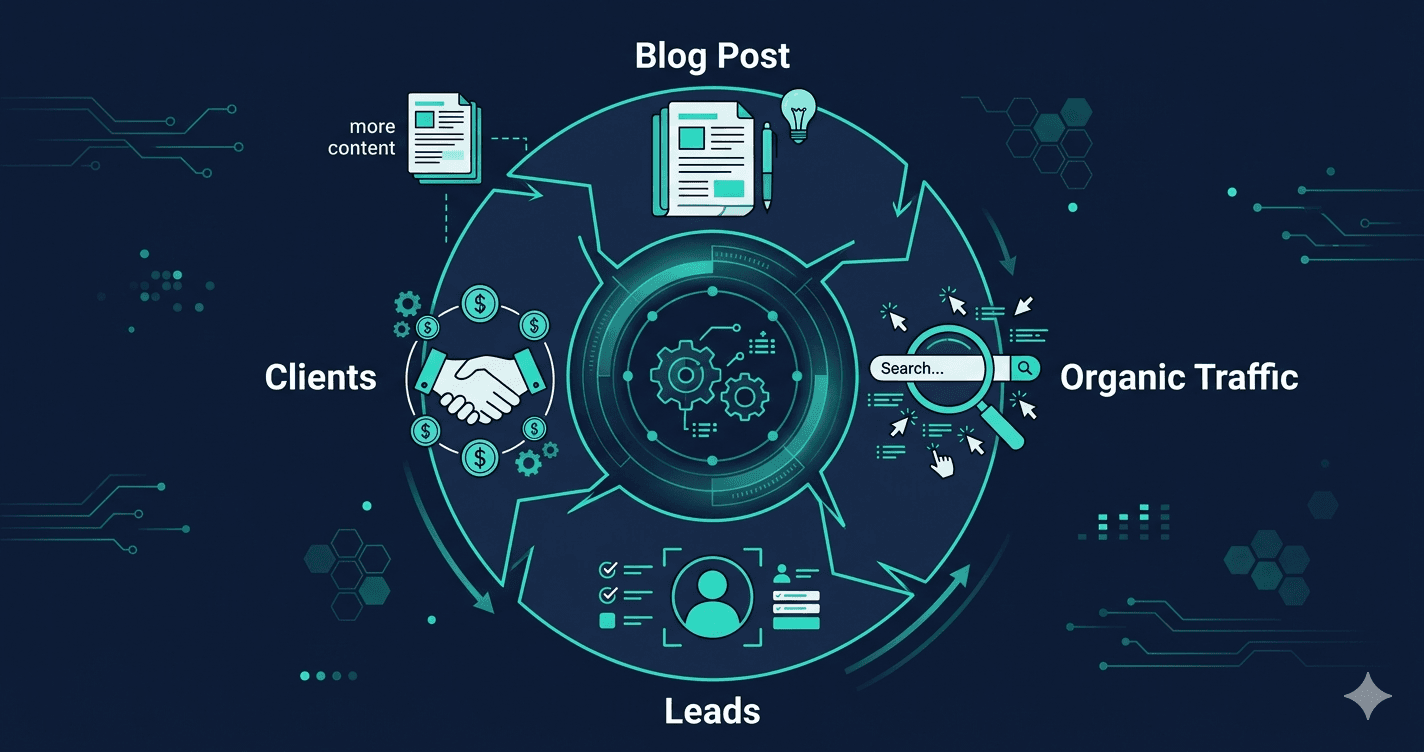
Paid ads stop the moment you stop paying. Content compounds. A post published today can drive traffic for years, and each new post strengthens your domain authority, which lifts rankings for everything else you publish.
For software companies, the opportunity is significant: buyers search for specific, technical terms — "best form backend for React", "how to reduce spam form submissions", "Next.js vs Remix for SaaS" — that have low competition and high purchase intent.
2. Shorter Sales Cycles
When a prospect lands on your site having already read three of your articles, they arrive pre-educated and pre-qualified. They understand your thinking, your approach, and your expertise. You're not starting from zero in the first call — you're confirming a fit.
3. Demonstrated Technical Credibility
In software, credentials matter less than evidence. A portfolio shows you can ship. A case study shows business results. A technical blog post shows how you think. That last one is often the deciding factor for CTOs and technical founders choosing an agency partner.
Publishing content that solves real engineering problems — deployment pipelines, architecture decisions, performance trade-offs — signals to buyers that your team has depth, not just a polished sales deck.
4. SEO Without the Guesswork
Keyword research for a software agency is surprisingly tractable. Your buyers search for:
- Services: "custom web application development", "React development agency"
- Problems: "my contact form is getting spam", "how to integrate Slack with my app"
- Comparisons: "Supabase vs Firebase for SaaS", ".NET Core vs Node.js performance"
Each of these is an article waiting to be written. Capture enough of them and you build a content moat that's genuinely hard for competitors to replicate quickly.
5. Content Fuels Every Other Channel
A single well-researched post can be repurposed into:
- A LinkedIn post (reach without ad spend)
- A newsletter issue (retention and re-engagement)
- A sales follow-up resource ("thought you'd find this relevant")
- An onboarding guide for new clients
- Internal documentation for your own team
The ROI multiplies the more you distribute.
What Good Content Looks Like for a Software Agency
Not all content is equal. The posts that drive real business results tend to share a few characteristics:
Specificity over breadth. "Web Development Best Practices" ranks for nothing and convinces nobody. "How We Reduced Load Time by 60% Using Next.js Image Optimization" ranks for something real and demonstrates capability.
Honest trade-offs. Buyers respect nuance. Explaining when you'd recommend a competitor's approach over your own builds more trust than pure self-promotion.
Depth that earns links. A 200-word post is forgettable. A thorough guide that becomes the resource someone bookmarks and shares is a link magnet — and links are what actually move SEO rankings.
Getting Started Without Overwhelming Your Team
You don't need a full-time content team. Start with a sustainable cadence:
- One post per month — pick a question you answered in a client call last week
- Repurpose to LinkedIn — a quick 3-paragraph post from the same material
- Track rankings at 90 days — content SEO takes time; give it a proper evaluation window
The compounding effect starts slowly and then becomes very difficult to ignore.
The Bottom Line
For software agencies and SaaS businesses, content marketing is one of the few growth channels that gets better over time rather than more expensive. The cost is mostly effort — writing clearly about what you already know. The return is a pipeline of pre-qualified buyers who found you, not the other way around.
If you're building software products and not publishing regularly, you're leaving a significant amount of inbound opportunity on the table. Need help with SEO and content strategy for your software business? See how we approach it.